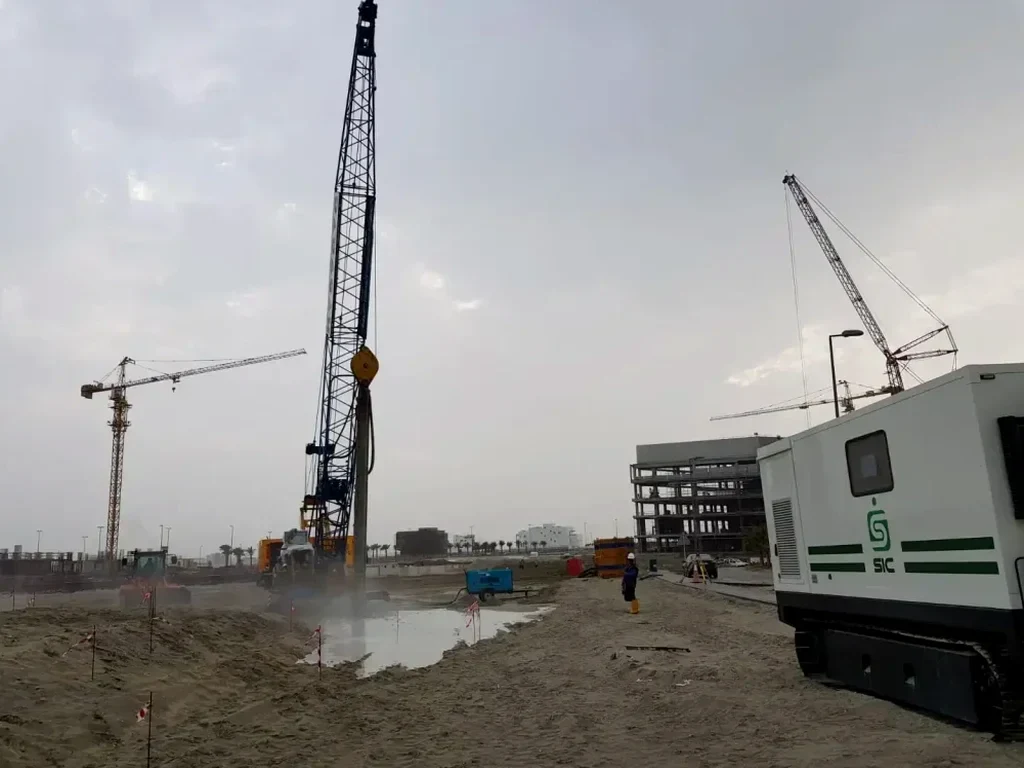
Nashville's rapid commercial expansion over the last three decades has pushed development onto the Central Basin's complex geological margins. The city sits at 36.1623°N, where Ordovician limestone bedrock meets thick deposits of clayey silt and residual soil. This interface creates a challenge for foundation engineers: loose, collapsible soils that cannot support heavy structural loads without improvement. The team addresses this directly through vibrocompaction design, a deep densification method that rearranges granular particles using a vibrating probe. With an annual precipitation of 47 inches feeding the Cumberland River basin, moisture-sensitive soils demand more than a standard approach. A granular matrix capable of dissipating excess pore pressure during seismic events is required, making vibrocompaction a technically sound choice for Nashville’s mid-rise and industrial sectors.
Properly designed vibrocompaction in Nashville’s basin soils transforms loose silty sand into a dense, drainable matrix capable of supporting 4,000 psf bearing pressure.