GEOTECHNICAL ENGINEERING
NASHVILLE
HomeRoadwayRigid pavement design

Rigid Pavement Design and Concrete Mix Testing for Nashville Infrastructure

Practical geotechnics, field-tested.

LEARN MORE

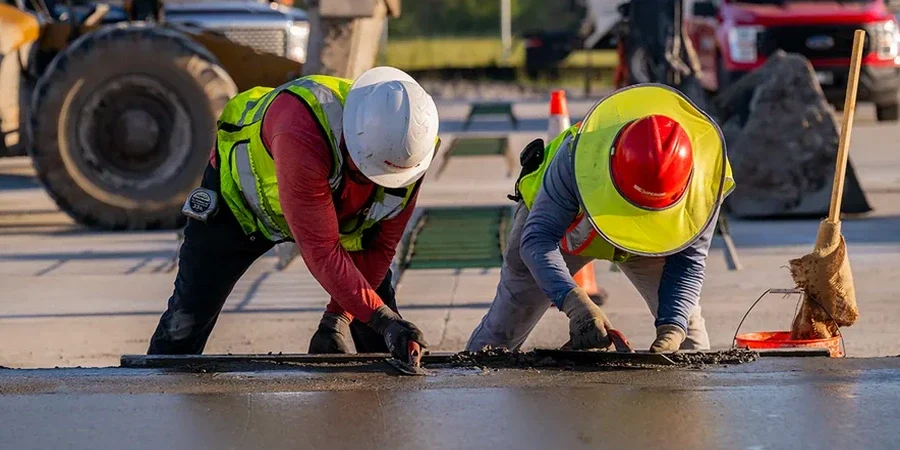
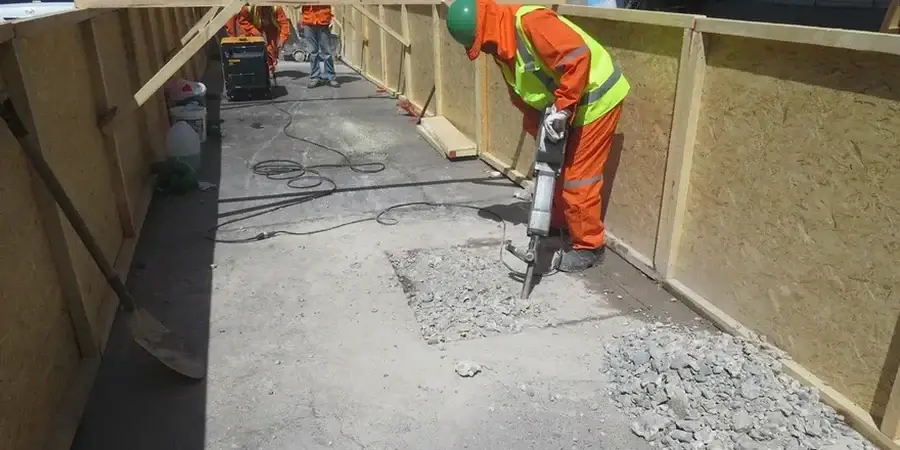
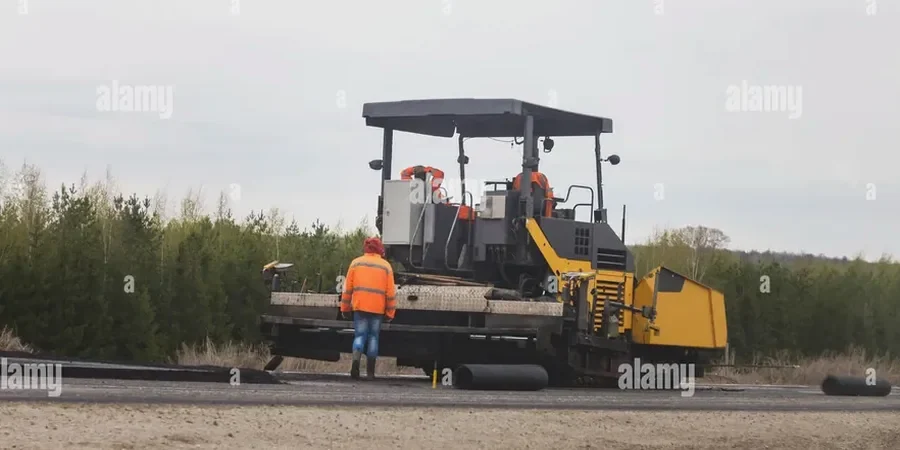
The concrete saw hums through the first joint as our field team pulls fresh cylinders from the batch truck on Briley Parkway. Rigid pavement design in Nashville starts here, with the mix. We check slump, air content, and temperature before the paver moves another foot. Nashville sits on a mix of limestone bedrock and fat clay residuum, so the subgrade reaction matters just as much as the compressive strength. Our lab runs modulus of rupture beams and shrinkage bars for every major pour, tying field performance back to the test pits data we logged the week before. A jointed plain concrete pavement specification for a Davidson County collector road demands more than a 28-day cylinder break. It requires aggregate soundness tests, alkali-silica reactivity screening, and a dowel bar alignment check once the slipform paver passes.

A rigid pavement joint is only as reliable as the dowel alignment and the subgrade support beneath it.
Our service areas

Our approach and scope

Around the Harpeth River floodplain, we see subgrade moisture swing 15 percent between August and January. That kind of seasonal movement punishes rigid pavement if the base layer is not drained and stabilized. Our design sequences always include a permeability assessment of the subbase, often using the in-situ permeability method with a double-ring infiltrometer before finalizing the slab thickness. We specify No. 57 stone with a filter fabric wrap when the underlying soil plots above 40 on the plasticity index, a common condition in the Nashville Basin. For industrial yards and bus terminals, we model the load transfer efficiency at contraction joints using finite element software, calibrating inputs with plate load tests on the prepared subgrade. The plate load test gives us the modulus of subgrade reaction, a value that directly drives the required concrete thickness and joint spacing.
Rigid Pavement Design and Concrete Mix Testing for Nashville Infrastructure
Technical reference — Nashville

Local ground factors

A warehouse off Harding Place opened with 40-foot joint spacing on a silty clay cut section. Within two winters, transverse cracks appeared at mid-panel in 60 percent of the slabs. The subgrade had been proof-rolled but never tested for shrink-swell potential. Our investigation found the clay had a plasticity index of 38 and a suction profile that pulled moisture from the perimeter drains into the slab support zone. We redesigned the replacement pavement with shorter joint spacing, a lime-stabilized subbase, and widened dowel baskets to accommodate the expected curl. The owner lost six figures in operational downtime. Nashville's residual soils demand a rigid pavement design that accounts for volume change, not just traffic loading.

Need a geotechnical assessment?

Reply within 24h.

Email: contact@geotechnicalengineering.biz

Regulatory framework

ASTM C78 / AASHTO T 97 (Flexural Strength of Concrete), ACI 330.1-14 (Specification for Unreinforced Concrete Parking Lots and Site Paving), AASHTO M 31 / ASTM A615 (Deformed and Plain Carbon-Steel Bars for Dowels), ASTM C1260 (Potential Alkali Reactivity of Aggregates), IBC 2021 / ASCE 7-22 (Minimum Design Loads), ASTM D2487 (Unified Soil Classification for Subgrade)

Reference parameters

ParameterTypical value
Flexural strength (MR)4.2 - 5.0 MPa (600 - 725 psi) at 28 days
Compressive strength (f'c)28 - 35 MPa (4000 - 5000 psi) per ACI 330
Joint spacing (JPCP)3.6 - 4.6 m (12 - 15 ft) for slab thickness 200-250 mm
Modulus of subgrade reaction (k)40 - 80 MPa/m (150 - 300 pci) for Nashville residuum
Air content (exterior flatwork)5% - 7% per ASTM C231 / AASHTO T 152
Dowel bar diameter32 - 38 mm (1.25 - 1.5 in) for slabs 250-300 mm thick
Alkali-silica reactivity (ASR)Expansion < 0.10% at 14 days per ASTM C1260

Questions and answers

What joint spacing works best for rigid pavement on Nashville's clay soils?

We typically specify joint spacing between 12 and 15 feet for slabs 8 to 10 inches thick on Nashville's fat clay residuum. Closer spacing reduces curling stress and mid-panel cracking risk when the subgrade experiences seasonal moisture swings. The exact spacing depends on the modulus of subgrade reaction, which we measure through plate load testing on the prepared subbase.

Does Nashville require dowel bars for all rigid pavement joints?

Metro Nashville and TDOT standards require dowel bars at all transverse contraction joints for public roadway rigid pavement. For private industrial slabs, dowels are recommended when slab thickness exceeds 8 inches or when the pavement supports heavy truck traffic. We design the dowel diameter and spacing based on the AASHTO mechanistic-empirical approach, considering the expected 18-kip equivalent single axle loads over the design life.

What is the typical cost range for rigid pavement design and testing in Nashville?

For a typical commercial rigid pavement project in Nashville, the combined design engineering and laboratory testing scope ranges from US$1,660 to US$6,360 depending on the project area, number of mix designs to verify, and required subgrade investigation depth. Projects with multiple pavement sections or specialized ASR mitigation measures fall toward the upper end of the range.

How do you prevent alkali-silica reaction in Nashville concrete pavement?

We screen all coarse aggregate sources using ASTM C1260 accelerated mortar bar testing. If expansion exceeds 0.10 percent at 14 days, we specify mitigation measures: Class F fly ash replacement at 20-25 percent, slag cement, or lithium nitrate admixture. Nashville's aggregate sources from the Ridley Limestone formation are generally low-reactivity, but we confirm this for every project.

Location and service area

We serve projects in Nashville and surrounding areas.

View larger map