GEOTECHNICAL ENGINEERING
NASHVILLE
HomeLaboratoryTriaxial test

Advanced Triaxial Testing for Nashville Basin Geology

Practical geotechnics, field-tested.

LEARN MORE

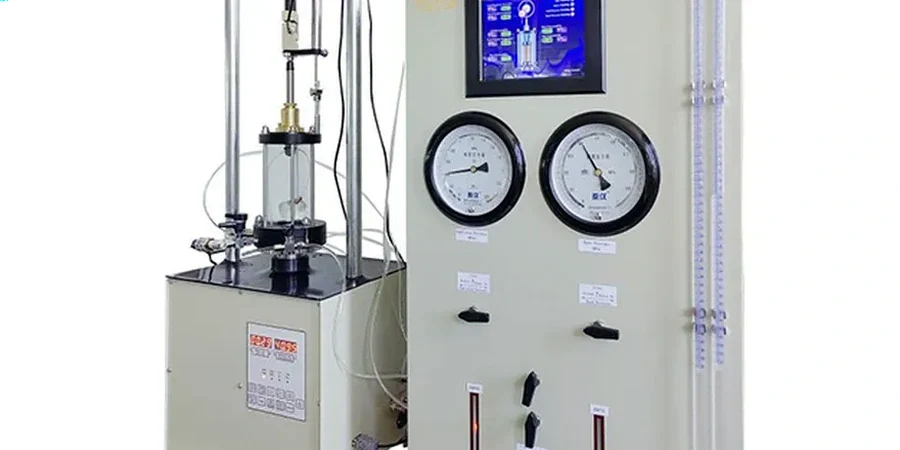
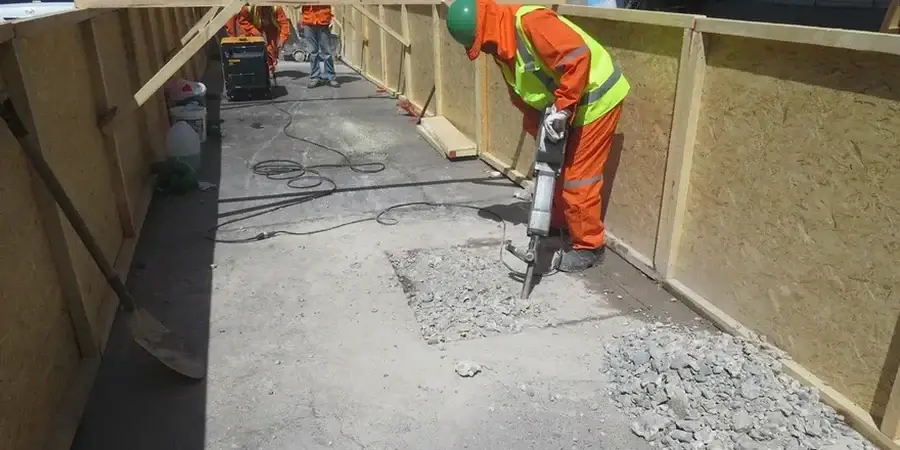
A common mistake we see on Nashville projects is selecting foundation parameters based on unconfined compression tests alone, then watching settlements appear within the first wet season. The Ordovician limestone beneath Davidson County weathers into a stiff, overconsolidated clay that loses significant strength when saturated. Without a proper triaxial test program that replicates in-situ confining pressure and drainage conditions, the effective stress parameters used in bearing capacity equations are little more than guesses. We run consolidated-undrained triaxial tests with pore pressure measurement on Shelby tube samples from the Hermitage and Bigby-Cannon formations so the design team gets real c-phi values, not textbook assumptions. Before mobilizing the drill rig for undisturbed sampling, the SPT drilling crew logs refusal depth on the bedrock surface, which in Nashville typically sits between 15 and 40 feet below grade depending on how close you are to the Cumberland River terrace.

A single CU triaxial test on Nashville clay residuum gives you three Mohr circles and a pore pressure coefficient — data that a pocket penetrometer can't provide.
Our service areas

Our approach and scope

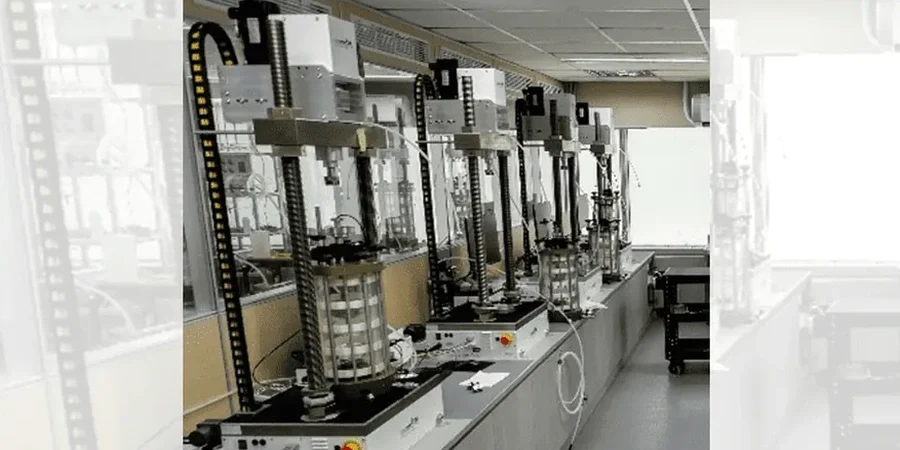
Nashville sits in the Central Basin, where summer humidity hovers above 90 percent and winter freeze-thaw cycles penetrate the fat clays that overlie the limestone shelf. Those seasonal moisture swings mean the near-surface soils rarely stay at a constant degree of saturation. We simulate this in the lab by running multistage triaxial tests that apply backpressure saturation, then shear the specimen under effective confining stresses that bracket the design foundation load. Each stage generates a Mohr-Coulomb failure envelope specific to the sample depth, which feeds directly into the bearing capacity and slope stability models. For deep excavations along the Music City Center expansion zone, we paired consolidated-drained triaxial results with slope stability analysis to confirm that a 28-foot cut through the clay residuum would stand during construction without excessive lateral deformation.
Advanced Triaxial Testing for Nashville Basin Geology
Technical reference — Nashville

Local ground factors

Sites in Green Hills, built on the thicker residuum of the Hermitage Formation, often show drained friction angles above 28 degrees with cohesion intercepts under 200 psf. Move six miles north to the Germantown area along the Cumberland River floodplain, and the same triaxial protocol returns effective friction angles below 22 degrees with a higher cohesion component from the alluvial silty clay. The difference matters: a footing designed for Green Hills conditions will be dangerously undersized if the geotechnical report extrapolates those numbers to a river-adjacent lot. We have also identified thin seams of montmorillonite-rich clay within the Bigby-Cannon residuum that produce very low residual strengths under large-strain triaxial shearing, a condition that must be flagged early before the retaining wall reinforcement schedule is finalized.

Need a geotechnical assessment?

Reply within 24h.

Email: contact@geotechnicalengineering.biz

Regulatory framework

ASTM D2850-23: Standard Test Method for Unconsolidated-Undrained Triaxial Compression Test on Cohesive Soils, ASTM D4767-11: Standard Test Method for Consolidated Undrained Triaxial Compression Test for Cohesive Soils, ASTM D7181-20: Standard Test Method for Consolidated Drained Triaxial Compression Test for Soils, IBC 2021 Section 1803: Geotechnical Investigations referencing ASCE 7-22, AASHTO T 297: Standard Method of Test for Consolidated-Undrained Triaxial Compression Test

Reference parameters

ParameterTypical value
Test standardASTM D2850 (UU), ASTM D4767 (CU), ASTM D7181 (CD)
Specimen diameter1.4, 2.0, or 2.8 inches depending on sample quality
Confining pressure range5 to 120 psi (typical for Davidson County depths)
Saturation methodBackpressure saturation with Skempton B-value ≥ 0.95
Shear rate (CU)0.001 to 0.01 inches per minute per ASTM D4767
Measured parametersc', φ', cᵤ, Af, E₅₀, stress path plots
Data outputDeviator stress vs. axial strain, p'-q diagrams, Mohr circles

Questions and answers

How long does a consolidated-undrained triaxial test take on Nashville clay?

A complete CU triaxial suite with pore pressure measurement on three specimens typically requires 10 to 14 working days. The consolidation phase alone can take 48 to 72 hours for the stiff Hermitage Formation clays because the hydraulic conductivity is very low, and we must reach at least 95 percent primary consolidation before shearing.

What does a triaxial test cost for a Nashville project?

A three-specimen CU triaxial suite with pore pressure measurement and full reporting ranges from US$1,690 to US$2,570 depending on sample depth, confining stress levels, and whether we need to run multistage shearing on a single specimen to conserve material. Shale or limestone core specimens fall at the upper end due to the extra preparation time.

Which ASTM standard applies to triaxial testing for Nashville building foundations?

For shallow foundation design on Nashville clay residuum, ASTM D4767 (Consolidated Undrained) is the most relevant standard because it provides effective stress strength parameters c' and φ' needed for drained bearing capacity analysis. The IBC 2021 Section 1803 references this method when groundwater conditions or long-term loading make drained parameters critical.

Location and service area

We serve projects in Nashville and surrounding areas.

View larger map