GEOTECHNICAL ENGINEERING
NASHVILLE
HomeSlopes & WallsSlope stability analysis

Slope Stability Analysis in Nashville: Karst Terrain and Shale Slopes

Practical geotechnics, field-tested.

LEARN MORE

Nashville sits at roughly 550 feet above sea level, draped over a foundation of Ordovician limestone that's been dissolving for millennia. That elevation change across the Central Basin means one thing for construction: slopes. Lots of them. From the steep cuts along I-440 to residential developments creeping up the Highland Rim, Davidson County has a hidden landslide hazard that catches developers off guard every wet season. We run slope stability analysis on projects ranging from 15-foot backyard cuts to 80-foot highway embankments, and the failure mechanism we encounter most often isn't deep-seated rotational slip—it's shallow sloughing triggered by water pressure in the weathered clay cap. Before you cut into a Nashville hillside, the test pits we excavate tell us exactly where that slickensided shale layer starts, which is usually the difference between a stable slope and a $200,000 repair bill.

A weathered shale slope in Nashville can lose 60% of its shear strength after a single heavy rain event if drainage isn't controlled from day one.
Our service areas

Our approach and scope

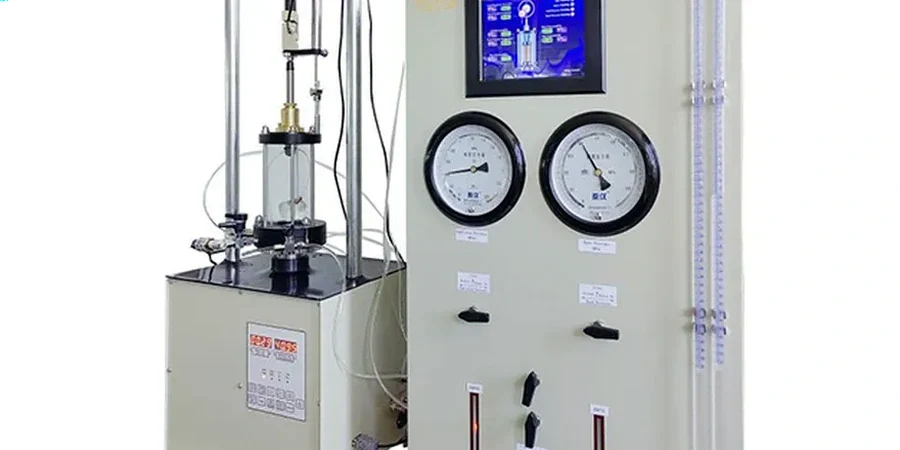
The Fort Payne and Chattanooga shale formations underlie much of Nashville's slope-prone terrain, and they weather to a stiff, fissured clay that loses strength dramatically when saturated. We typically see plasticity indices in the CH range (50-65%), with residual friction angles dropping below 12 degrees once the material has sheared. That's why our slope stability analysis always pairs direct shear testing with pore pressure modeling—running a limit equilibrium analysis without accounting for perched groundwater in Nashville's karst fractures is basically guessing. We use Roctopple or Slide2 for most assessments, but the input parameters come straight from our triaxial cell and Atterberg bench. On deeper failures, combining our lab data with CPT soundings through the colluvium gives us a continuous strength profile without the disturbance of Shelby tube sampling. For slopes exceeding 40 feet, we also run pseudostatic cases per IBC Chapter 18 to account for the New Madrid seismic zone influence, even if Nashville's peak ground acceleration is moderate compared to Memphis.
Slope Stability Analysis in Nashville: Karst Terrain and Shale Slopes
Technical reference — Nashville

Local ground factors

The most common mistake we see local grading contractors make is treating Nashville shale as rock during excavation planning. It isn't rock—it's a diagenetically indurated clay that relaxes, expands, and slakes within weeks of being exposed to air and water. We've walked onto sites in Bellevue where a near-vertical cut stood perfectly for six months, then collapsed overnight after a 2-inch rain. The trigger wasn't the rain alone; it was the progressive loss of suction in the unsaturated zone, a mechanism that a simple total-stress analysis completely misses. If you're building a retaining wall at the toe, the slope stability analysis must also model the wall's influence—otherwise the failure surface just passes beneath it. On projects near karst features like sinkholes or losing streams, we add a sensitivity analysis for void migration, because a subsurface cavity collapse can unload the toe and trigger a retrogressive slide faster than any storm.

Need a geotechnical assessment?

Reply within 24h.

Email: contact@geotechnicalengineering.biz

Regulatory framework

ASTM D1586 (Standard Penetration Test), ASTM D2487 (Unified Soil Classification System), ASCE 7-22 Chapter 18 (Seismic Design for earth retaining and slope stability), IBC 2021 Section 1806 (Foundation walls and retaining structures), ASTM D6467 (Torsional ring shear for residual strength)

Reference parameters

ParameterTypical value
Analysis methodLimit equilibrium (LEM) + finite element (FEM) for complex geometry
Strength envelopeMohr-Coulomb, c' and φ' from consolidated-drained triaxial or direct shear
Pore pressurePiezometric monitoring + steady-state seepage modeling
Seismic coefficientkh = 0.05–0.10 per IBC Site Class D for Nashville Basin
Factor of safety (static)≥1.5 for permanent slopes; ≥1.3 for temporary cuts
Factor of safety (seismic)≥1.1 per ASCE 7-22 for critical infrastructure
Back-analysisRe-calibration from existing slide scarps where available
Drainage designHorizontal drains, toe buttresses, or interceptor trenches per site conditions

Questions and answers

What's the typical cost range for a slope stability analysis on a residential lot in Nashville?

For a single-family residential slope in Davidson County—typically a 15 to 30-foot cut with one or two retaining tiers—the analysis runs between US$1,370 and US$3,820 depending on whether we need to drill a borehole for shear strength samples or can rely on test pit data and existing geotechnical reports from adjacent parcels.

Do Nashville building codes require a slope stability analysis for cuts over a certain height?

Metro Nashville codes reference IBC 2021, which triggers a geotechnical investigation for cuts exceeding 10 feet or slopes steeper than 2H:1V. In practice, we recommend analysis for any cut over 8 feet in weathered shale because of the rapid strength loss after exposure. The codes department in Metro will also require a signed and sealed report if the slope influences a neighboring property or public right-of-way.

How long does a slope stability study take from start to finish?

A typical project timeline is 3 to 4 weeks. Week one covers field investigation—drilling, sampling, and piezometer installation. Weeks two and three are for laboratory shear testing on the recovered samples, which can't be rushed because drained tests on low-permeability Nashville clay take several days per specimen. Week four is analysis, report writing, and drafting cross-sections with the recommended slope geometry and drainage measures.

Can you analyze an existing slope that's showing cracks or movement?

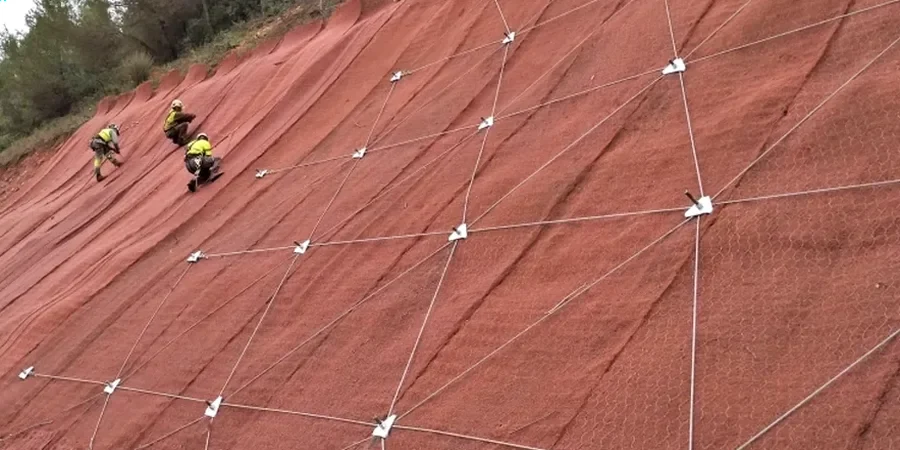
Yes, and this is actually one of the most valuable applications of the method. We perform a back-analysis of the existing failure using laboratory-measured residual strengths to calibrate the model. Once the model matches the observed movement, we can test different stabilization options—flattening, drainage, buttressing, or anchored walls—and quantify which combination returns the required factor of safety without over-engineering the solution.

Location and service area

We serve projects in Nashville and surrounding areas.

View larger map