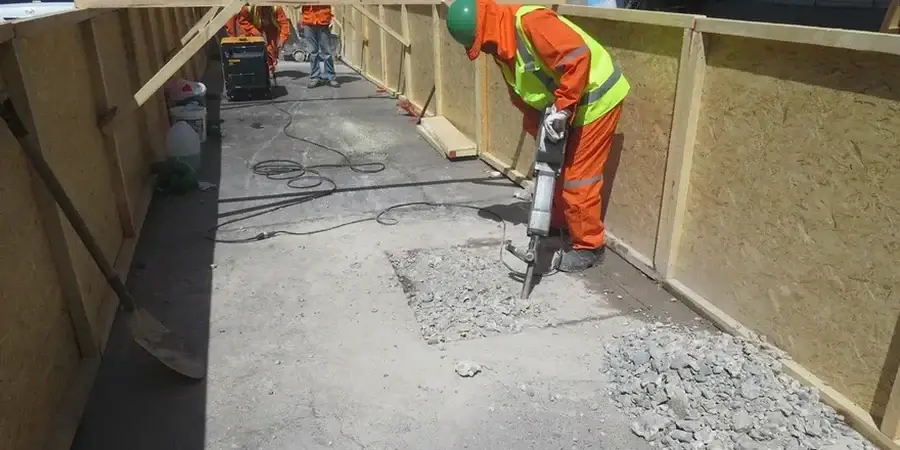
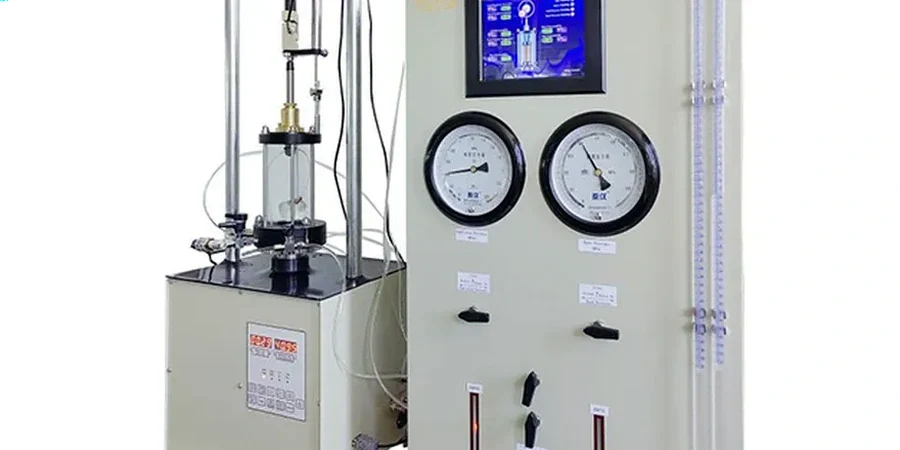
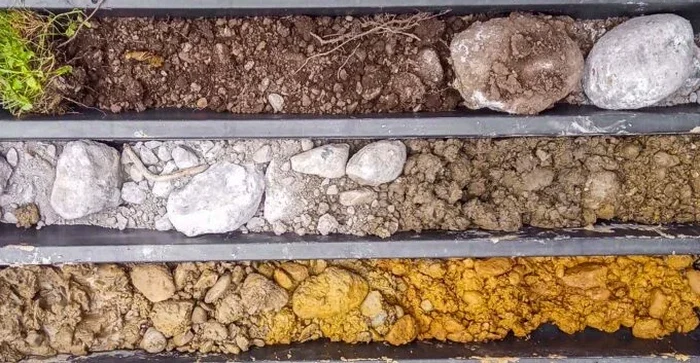
In Nashville, the transition from Ordovician limestone to deeply weathered clayey residuum happens abruptly, often within a single excavation. We have opened exploratory test pits where competent rock lies just four feet beneath fat clay, a profile that fools inexperienced drillers and leads to differential settlement if foundation design assumes uniform conditions. The exploratory test pit eliminates that guesswork. By exposing a continuous vertical face, our team logs stratigraphic contacts, measures discontinuity spacing in the rock mass, and collects bulk samples from each horizon for laboratory classification under ASTM D2487. For projects near the Cumberland River or along the I-440 corridor where alluvial deposits overlie solution-weathered bedrock, the test pit provides a level of spatial resolution that borings alone cannot match. The information feeds directly into bearing capacity calculations, lateral earth pressure assumptions for basement walls, and stormwater infiltration modeling.
A single test pit in Nashville residuum can reveal more about bearing conditions than five borings spaced across the same lot.