GEOTECHNICAL ENGINEERING
NASHVILLE
HomeInvestigationSPT (Standard Penetration Test)

SPT Testing in Nashville, TN: Geotechnical Drilling & Soil Data

Practical geotechnics, field-tested.

LEARN MORE

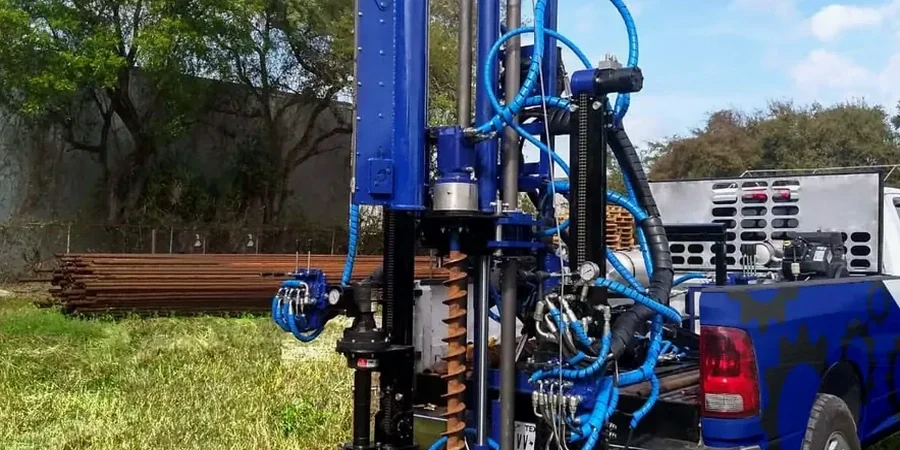
A CME-75 drill rig sets up on a tight lot near Centennial Park. The crew positions the 140-pound safety hammer over the borehole. The auto trip releases. The hammer drops 30 inches. This is the SPT drilling operation that Nashville engineers rely on to get N-values from the Ordovician limestone residuum and alluvial clay layers that define the Central Basin. The Standard Penetration Test remains the most practical way to sample soil when you cannot see through the chert gravel and stiff red clay that sit above Nashville's bedrock. The data goes straight into bearing capacity calculations for shallow foundations—a necessity in a city where the subsurface can shift from dense gravel to weathered shale in less than 10 vertical feet.

In Nashville's Central Basin, an SPT boring that stops at 15 feet can miss a buried karst void at 22 feet—always go deeper than the initial site plan suggests.
Our service areas

Our approach and scope

We recently completed a test program near the Cumberland River for a proposed mixed-use building. The geotechnical report required SPT borings to 60 feet to confirm the depth to competent limestone. In the upper 20 feet, the crew encountered soft alluvial silts with N-values between 4 and 7—typical of floodplain deposits along the river. The drilling team switched to hollow-stem augers and performed the test at 5-foot intervals. Those low blow counts triggered a design change from spread footings to driven piles. When we combine SPT data with a CPT test profile, we get continuous tip resistance and sleeve friction that fill in the gaps between spoon samples. For projects where bedrock depth varies unpredictably, the seismic refraction method can map the top of rock before the drill rig even mobilizes. Nashville's karst geology under the eastern part of the city makes this combination especially valuable—voids and pinnacles are common in the Lebanon Limestone member.
SPT Testing in Nashville, TN: Geotechnical Drilling & Soil Data
Technical reference — Nashville

Local ground factors

Contractors occasionally skip deep borings on Nashville's east side, assuming the shallow limestone outcrops mean solid rock at 10 feet. That assumption fails in karst terrain. The Lebanon Limestone can have solution cavities—some filled with soft clay, some open. An SPT spoon that drops through a void gives zero blow counts and no recovery. Without that data, a drilled shaft might be designed too short or lose concrete into a cavity. The IBC 2021 requires site-specific geotechnical investigation for all foundations, and Nashville's Metro codes enforce this strictly. In the alluvial valleys along the Harpeth River and Mill Creek, soft clays with organic content demand SPT data to estimate settlement and lateral spreading risk. Skipping the test means guessing—and guessing gets expensive fast.

Need a geotechnical assessment?

Reply within 24h.

Email: contact@geotechnicalengineering.biz

Regulatory framework

ASTM D1586-18: Standard Test Method for Standard Penetration Test (SPT) and Split-Barrel Sampling of Soils, ASTM D2487-17e1: Standard Practice for Classification of Soils for Engineering Purposes (Unified Soil Classification System), IBC 2021: Sections 1803 and 1805 on foundation investigations and allowable bearing pressures, ASCE 7-22: Minimum Design Loads for Buildings – seismic site class determination from N-values

Reference parameters

ParameterTypical value
Hammer typeSafety hammer with auto trip (per ASTM D1586)
Energy ratio calibrationMeasured ER₆ for N₆₀ correction
Standard sampler2-inch OD split spoon, 18-inch drive shoe
Blow count recordingThree 6-inch increments (N-field total)
Typical depth in Nashville basin30 to 80 feet below grade
Soil classification referenceUSCS per ASTM D2487
Seismic parameters derivedShear wave velocity via N-Vs correlations

Questions and answers

How much does an SPT boring cost in Nashville?

A single SPT boring in the Nashville area typically runs between US$540 and US$860. The final cost depends on depth, access conditions, and whether we need to core through chert or limestone layers. Mobilization and traffic control on Metro streets add to the total. We provide a fixed-price proposal after reviewing your site plan.

How deep do SPT borings need to go in Nashville?

It depends on the geology under your site. In the alluvial valleys along the Cumberland River, we usually bore 50 to 80 feet to reach competent limestone. On hillsides in West Nashville where weathered rock is shallow, 30 to 40 feet may be enough. The IBC requires borings deep enough to capture all strata that affect foundation performance.

What is the difference between SPT and CPT testing?

SPT drives a split-spoon sampler and recovers a physical soil sample while counting blows per foot. CPT pushes an electronic cone and records continuous tip resistance and sleeve friction without sampling. SPT gives you a soil sample for visual classification; CPT gives you a continuous profile of soil behavior. We often combine both methods on Nashville projects when the site has variable alluvial deposits.

Do I need an SPT if I already have a soil map?

Soil maps only describe the top 6 feet for agricultural or planning purposes. They do not provide engineering properties like N-values, shear strength, or consolidation parameters. Nashville's karst geology and deep alluvial fills demand site-specific SPT data before any foundation design. A soil map is a starting point—not a substitute for a geotechnical investigation.

Location and service area

We serve projects in Nashville and surrounding areas.

View larger map