GEOTECHNICAL ENGINEERING
NASHVILLE
HomeFoundationsRaft/mat foundation design

Raft & Mat Foundation Design in Nashville, TN

Practical geotechnics, field-tested.

LEARN MORE

Drive ten minutes from the limestone bluffs of Belle Meade east toward the Cumberland River floodplain in East Nashville, and you've crossed three distinct soil profiles. The first sits on weathered Fort Payne chert, the second on alluvial silts from centuries of river meandering, and the third—well, that's where things get interesting for foundation design. Nashville's geology doesn't read textbooks. It reads like a messy novel with sinkholes, fat clays, and buried organic lenses all within a single city block. A raft or mat foundation is often the smartest way to bridge these transitions without fighting the ground. When we design a mat foundation here, we're not just checking bearing capacity—we're solving for differential settlement across soils that can swell 3 inches seasonally. The CPT test data often reveals soft zones at 8 to 15 feet that standard borings miss, especially near the Radnor Yard area where old rail beds compacted unpredictably over the decades.

A well-designed raft foundation in Nashville doesn't fight the clay—it flexes with it, distributing seasonal volume changes across a stiffened slab that moves as one unit.
Our service areas

Our approach and scope

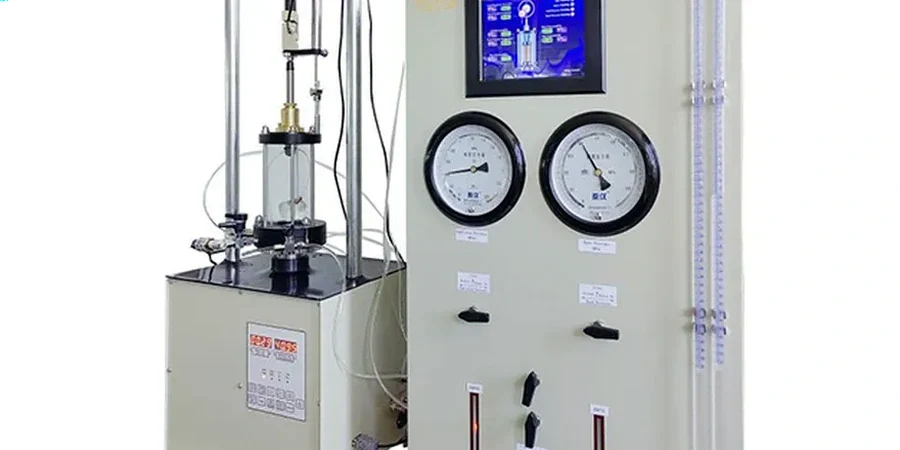
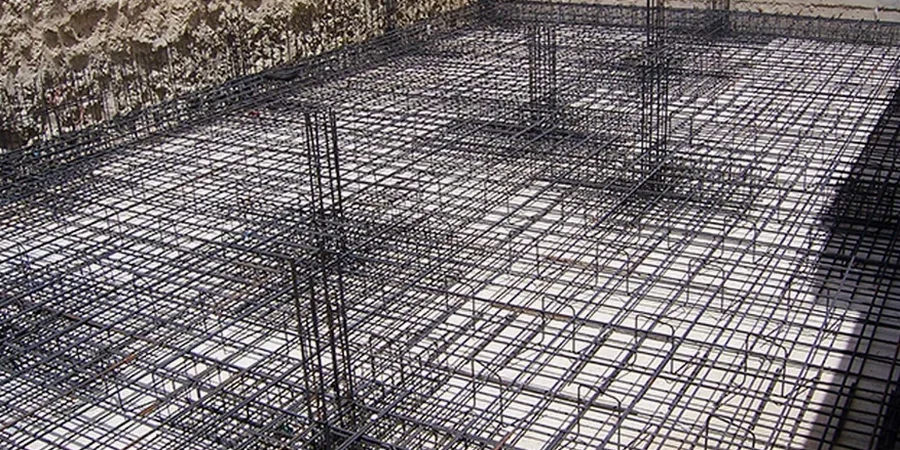
One thing we consistently see across Nashville job sites: contractors underestimate how much the local clay shrinks during August droughts. In neighborhoods like Green Hills, where mature oaks suck moisture from the upper 15 feet of soil profile, the volumetric shrinkage can pull the ground away from a mat foundation by half an inch or more. That gap invites water intrusion later when fall rains return, creating a cyclic wet-dry loading pattern that fatigues the slab over 20 years. Our mat foundation designs incorporate deepened edge beams and moisture-conditioned subgrade preparation that breaks this cycle. We also run ASTM D4546 swell-consolidation tests on undisturbed Shelby tube samples from the proposed bearing depth—not just on near-surface grab samples—because the expansive potential peaks at 8 to 12 feet in the Lebanon limestone residuum common across the southern half of the city. The mat reinforcement layout then follows ACI 318 provisions for combined soil-structure interaction, accounting for both the peak heave and the long-term equilibrium moisture condition that eventually establishes itself under a covered slab.
Raft & Mat Foundation Design in Nashville, TN
Technical reference — Nashville

Local ground factors

The Ordovician-age limestone beneath Nashville is riddled with solution cavities—what geotechnical folks call karst. The USGS karst map for central Tennessee shows a dense concentration of sinkholes right through Davidson County, with several documented collapses along the I-24 corridor in the past decade. A raft foundation distributes structural loads broadly enough that a small void activation doesn't trigger catastrophic differential settlement the way isolated footings would. But that only works if the design accounts for the actual cavity depth and the overburden arching ratio, which we verify through cross-hole seismic and probe drilling. Skip that step and you're betting a million-dollar structure on a limestone roof that might be paper-thin. We've also seen groundwater perched at 6 to 10 feet in the Sylvan Park area after heavy winter rains, which changes the buoyancy calculation for mat foundations completely. The IBC mandates a minimum factor of safety of 3.0 against flotation—but that's a starting point, not a guarantee.

Need a geotechnical assessment?

Reply within 24h.

Email: contact@geotechnicalengineering.biz

Regulatory framework

IBC Chapter 18 (Soils and Foundations), ACI 318-19 (Building Code Requirements for Structural Concrete), ASCE 7-22 (Minimum Design Loads for Buildings), ASTM D4546 (One-Dimensional Swell or Collapse of Soils)

Reference parameters

ParameterTypical value
Bearing pressure under mat1,500 to 3,000 psf (site-dependent)
Total settlement limit1 inch (IBC Section 1805)
Differential settlement limit1/2 inch over 30 ft span
Minimum mat thickness12 to 24 inches typical
Subgrade modulus range50 to 150 pci (residual clay)
Reinforcement gradeASTM A615 Grade 60
Minimum concrete strength4,000 psi (ACI 318 exposure)

Questions and answers

What does raft/mat foundation design cost for a Nashville project?

For a typical single-family residence or small commercial building in Davidson County, the geotechnical investigation and foundation design package runs between US$900 and US$4,000, depending on the number of borings required and the complexity of the karst assessment. Larger multi-story or industrial mat foundations fall toward the upper end and may require supplemental geophysical surveys.

When is a mat foundation better than isolated footings in Middle Tennessee?

A mat foundation makes sense when the allowable bearing pressure is below 2,000 psf, when expansive clay zones are mapped within the bearing stratum, or when the column spacing is tight enough that individual footings would overlap. In Nashville's karst areas, a mat also provides redundancy against localized sinkhole-induced settlement that isolated footings simply cannot offer.

How deep do you investigate for a mat foundation in Nashville's limestone geology?

Our standard boring depth is 30 to 50 feet below the proposed mat bearing elevation, with at least two borings extending deeper to check for solution cavities. If we encounter weathered limestone with voids or soft clay-filled seams, we may recommend probe drilling or cross-hole seismic tomography to map the cavity extent before finalizing the mat design.

Location and service area

We serve projects in Nashville and surrounding areas.

View larger map